Mediation Isn’t Just for Divorce: What It Really Is and When It Helps
Updated: May 24

Hey y’all,
When most people hear the word mediation, their minds immediately jump to divorce court. Somewhere along the way, mediation got labeled as something that only happens when marriages are ending.
But that’s not the full story.
Mediation is actually one of the most practical tools available for resolving everyday conflicts. It’s simply a structured conversation guided by a neutral professional whose job is to help people talk through disagreements and work toward solutions that make sense for everyone involved.
It’s not about taking sides. It’s not about deciding who wins or loses. It’s all about clarity, communication, and resolution.
Mediation Is About Conversation, Not Court
One of the biggest misconceptions about mediation is that it only happens once a legal case has already begun. While mediation is sometimes used during legal proceedings, it is often most effective before situations reach that point.
In many cases, mediation helps people resolve issues early enough that they never have to step into a courtroom at all.
Instead of waiting until conflict escalates, mediation gives people a structured space to talk things through, identify the real issues, and develop solutions that everyone can live with.
Situations Where Mediation Can Help
Mediation can be used in many different situations, including:
Family disagreements
Co-parenting concerns
Workplace conflict
Business partnerships
Neighbor disputes
Communication breakdowns between individuals
Any situation where people are struggling to communicate or find common ground can benefit from mediation.
The key requirement is simple: people must be willing to sit down and talk.
Why Mediation Works
One reason mediation is effective is because it allows the people involved in the conflict to remain in control of the outcome.
In court, a judge makes decisions for you. In mediation, the people involved work together to create solutions that reflect their real-life needs and circumstances.
This often leads to agreements that are more practical, more sustainable, and less stressful for everyone involved.
Mediation also creates an environment where each person has the opportunity to be heard. Many conflicts grow larger simply because people feel ignored or misunderstood. When communication improves, solutions often become easier to see.
The Role of the Mediator
A mediator is a neutral professional trained to guide difficult conversations. The mediator does not take sides, make decisions, or determine who is right or wrong.
Instead, the mediator helps keep the conversation respectful and focused. They ask clarifying questions, identify areas of agreement, and help the parties explore possible solutions.
Sometimes people already know what needs to happen. They just need a calm, structured setting to work through the discussion.
A Different Way to Address Conflict
Conflict is a normal part of life. Avoiding it rarely makes things better, and letting it grow unchecked often makes things worse.
Mediation offers another option. It allows people to approach conflict with intention, respect, and the goal of moving forward.
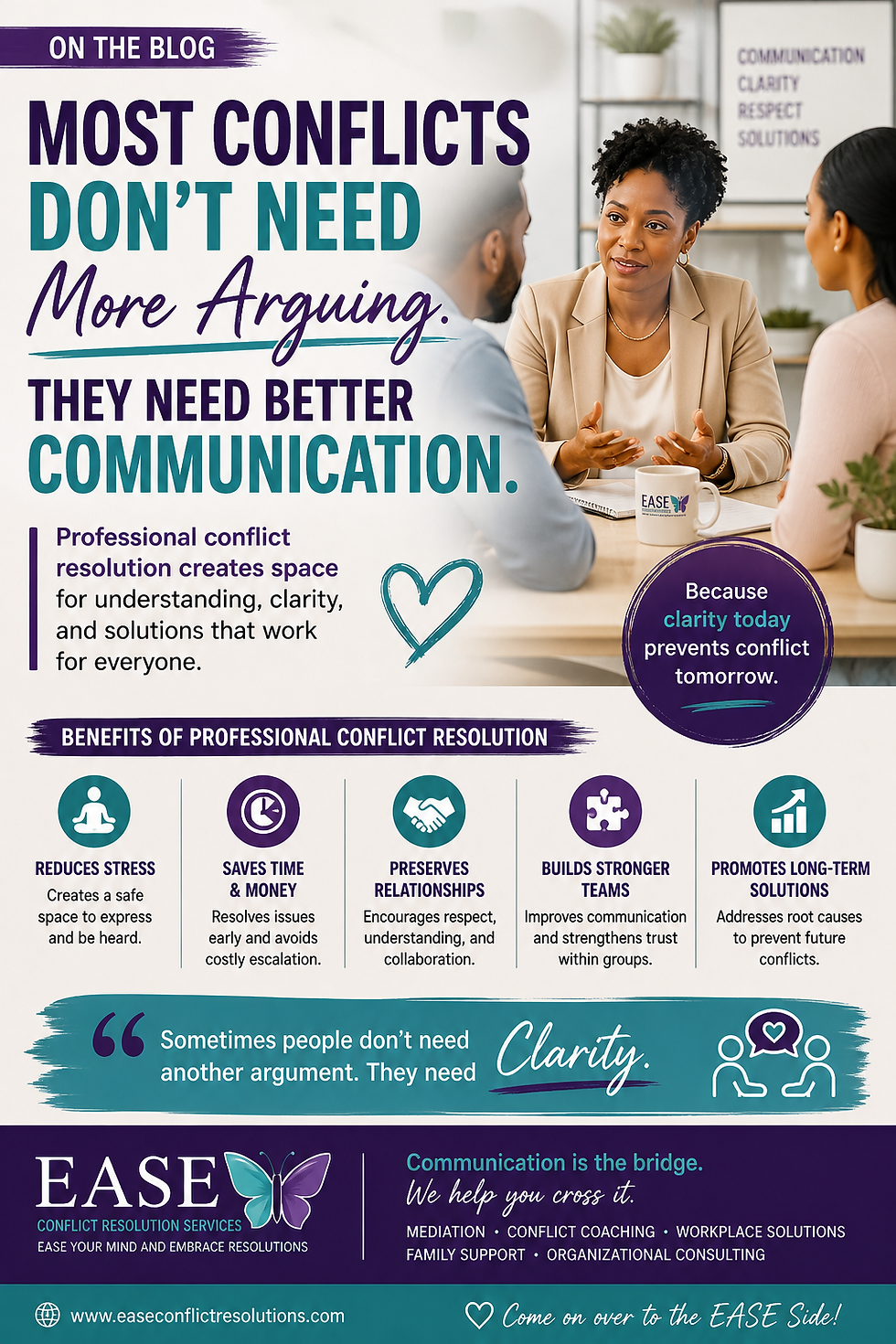
At EASE Conflict Resolution Services, the focus is on helping people navigate conflict in a way that promotes understanding and workable solutions. Mediation is not just about settling disputes. It is about helping people communicate more effectively so problems can be addressed before they become overwhelming.
Sometimes the most powerful step toward resolution is simply starting the conversation.
If you are dealing with a conflict and are not sure where to begin, mediation may be worth considering.
Learn more about mediation services or schedule a consultation through the EASE Conflict Resolution Services website.


Comments